Together European Union countries can buy military equipment faster, at a lower cost and with greater compatibility if they so choose. That is the idea behind collaborative defence procurement, one of the European Defence Agency’s (EDA) main tasks. EDA will establish a collaborative defence procurement centre for off-the-shelf military equipment in the coming months.
By helping EU Member States buy defence materiel and equipment together, EDA supports a more efficient approach to procurement. Joint purchasing can reduce administrative burden, speed up delivery, achieve lower costs and help militaries operate together.
Today, more than 80% of EU defence procurement is run on a national basis. According to a recent EPRS study, €2.8 billion could be saved if European countries increased their collaborative procurement in defence to 30%. These potential savings represent the value of 28 eurofighter jets or 100 Leopard 2 A8 battle tanks.
By agreeing on requirements and pooling demand, countries can increase their purchasing power and avoid competing against each other for the same equipment, especially at a time of increased demand. Common requirements also make it easier for armed forces to share equipment, ammunition, spare parts and other materials. For smaller Member States, joint procurement can open access to capabilities that may be too costly, slow or complex to buy alone.
As described in the CARD Report 2024, joint procurement also brings predictability and longer-term contracts to the European defence industry, supporting faster production and strengthening supply chains.
What is EDA's role?
Turning these benefits into practical results requires countries to identify common needs and choose the right procurement route. This is where EDA comes in.
The Agency's work starts well before contracts are signed. It first brings together participating countries to discuss their needs, harmonise requirements and aggregate demand. Then EDA surveys European industry to assess whether suppliers can meet the consolidated requirements. The Agency also analyses which EU instruments could support the project.
The results are set out in a business case, giving participating Member States the information they need to decide whether to launch the joint procurement and whether EDA acts as contracting authority.
From ammunition to specialised equipment
The focus is on off-the-shelf products and services. Ammunition is a clear example: all armed forces need reliable supplies, and demand has increased sharply since Russia’s war of aggression against Ukraine. “If individual countries were to procure the same type of ammunition, they would need to organise 28 different procurement processes,” says Giuseppe Dello Stritto, Head of Land and Logistics at EDA. “By bringing together demand, Member States can place larger orders, reduce costs and increase standardisation. The alternative would mean many orders, higher prices and reduced interoperability.”
EDA launched a fast track joint procurement project in 2023, involving 27 EU Member States and Norway. Still ongoing, its goal to jointly procure ammunition types, including artillery, tank, anti-tank, mortar, autocannon and small arms ammunition.
For 155 mm artillery ammunition, EDA signed 60 framework contracts and gathered orders worth over €380 million. For the more recent 84 mm Carl Gustaf anti-tank/multi-use ammunition, the first joint order submitted on behalf of three countries was worth €22 million. Further calibres are to come.
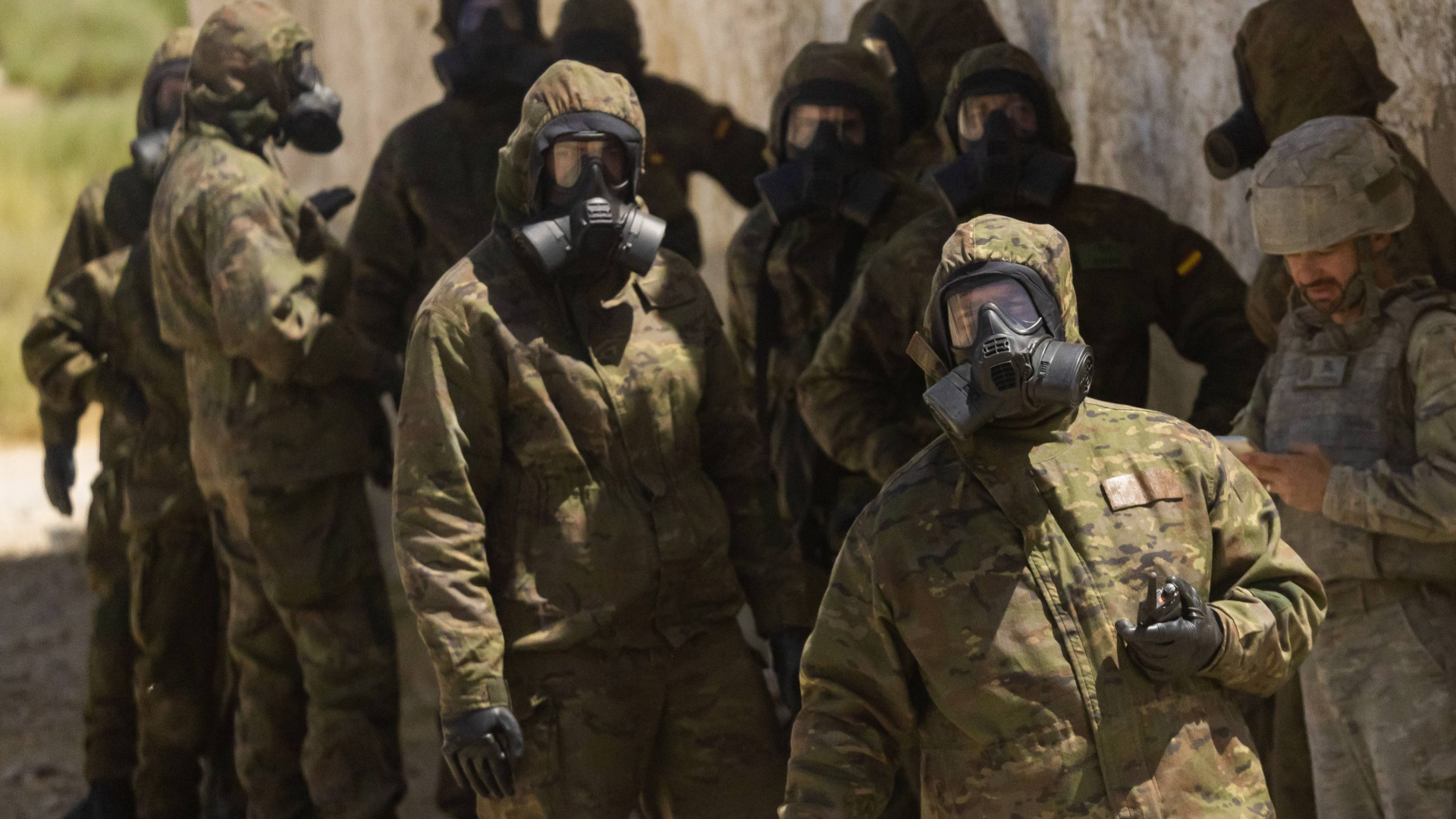
To protect armed forces against chemical, biological, radiological and nuclear (CBRN) hazards, the Agency has brought together the technical requirements of 11 Member States to procure CBRN protective masks, filters and suits. Two framework contracts with industry are currently in place for the purchase of CBRN suits, with the first order amounting to €3.6 million for four Member States. In summer 2026, EDA has also signed 3 framework contracts for CBRN filters.
EDA is also acting as contracting authority for 11 Member States to help them procure soldier equipment, including helmets and body armour. In 2025, three EU countries received the first delivery of flight suits from a joint order.
For loitering munitions, EDA completed a business case in late 2025 for 18 Member States to move ahead on joint procurement.
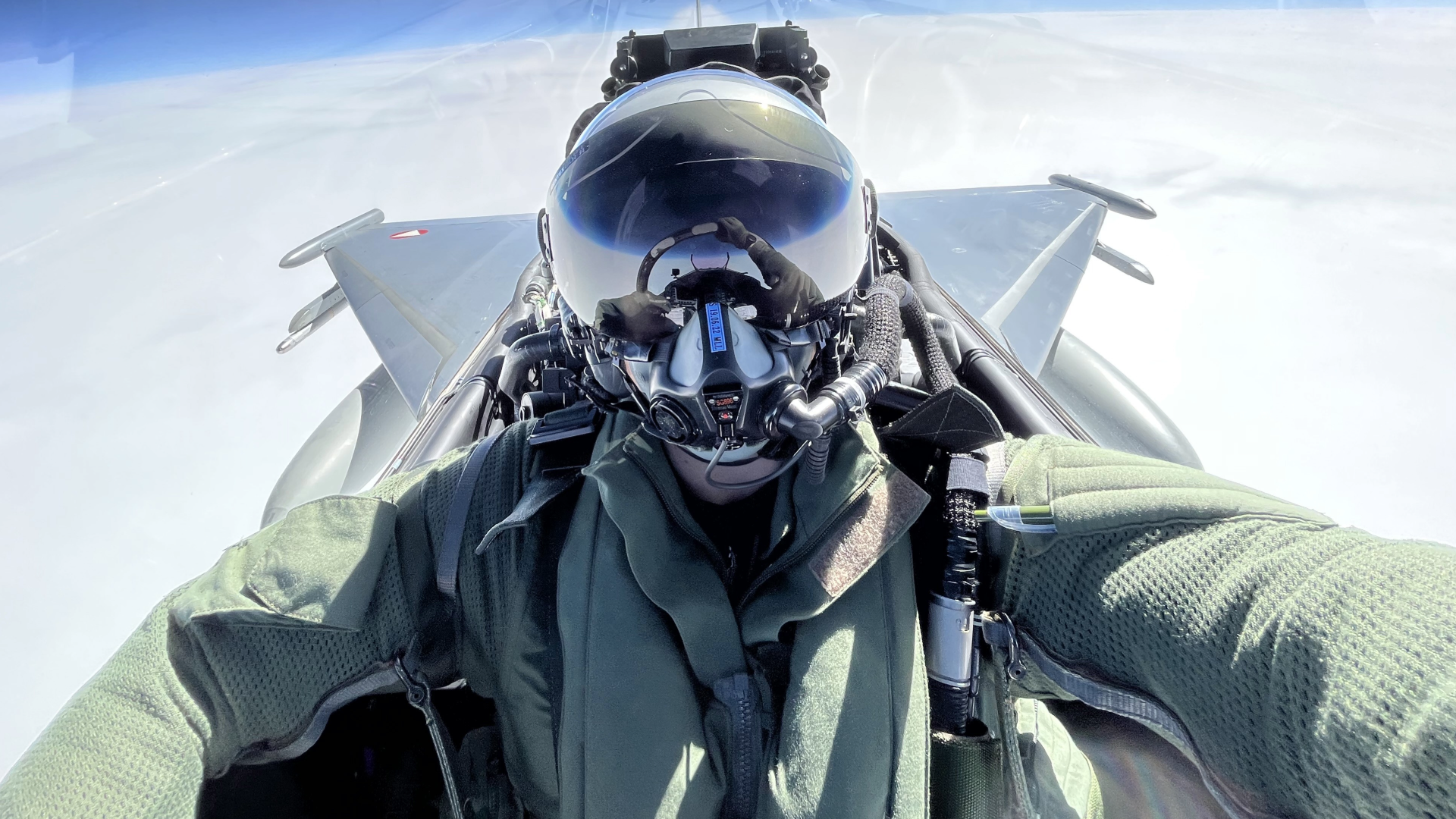
Illustrative photo by Eurofighter and Austrian Air Forces.
What is next for EDA in joint procurement?
In October 2025, EU leaders called on Member States to do more joint procurement with EDA's support. In May 2026, Ministers of Defence gave the green light for a collaborative defence procurement centre within EDA, soon to be operational.
With this new structure, the Agency will have the capacity to handle several procurement projects at the same time and provide better services to Member States, with a view to future expansion. More complex projects, such as tanks, fighter jets or frigates, remain beyond EDA's remit. “We are not duplicating national or international procurement agencies,” says Gianluca Serra, EDA’s Director for Corporate Services. “We offer the possibility to buy the most urgently needed and unaddressed equipment.”
Joint procurement is not an end in itself but it is a practical tool to improve readiness, strengthen Europe’s defence industry, support Ukraine and help European armed forces operate together.
All images used in this article are illustrative. The equipment shown does not represent, identify, or imply any specific company, brand, manufacturer, or supplier. Any resemblance to actual equipment or organizations is coincidental.