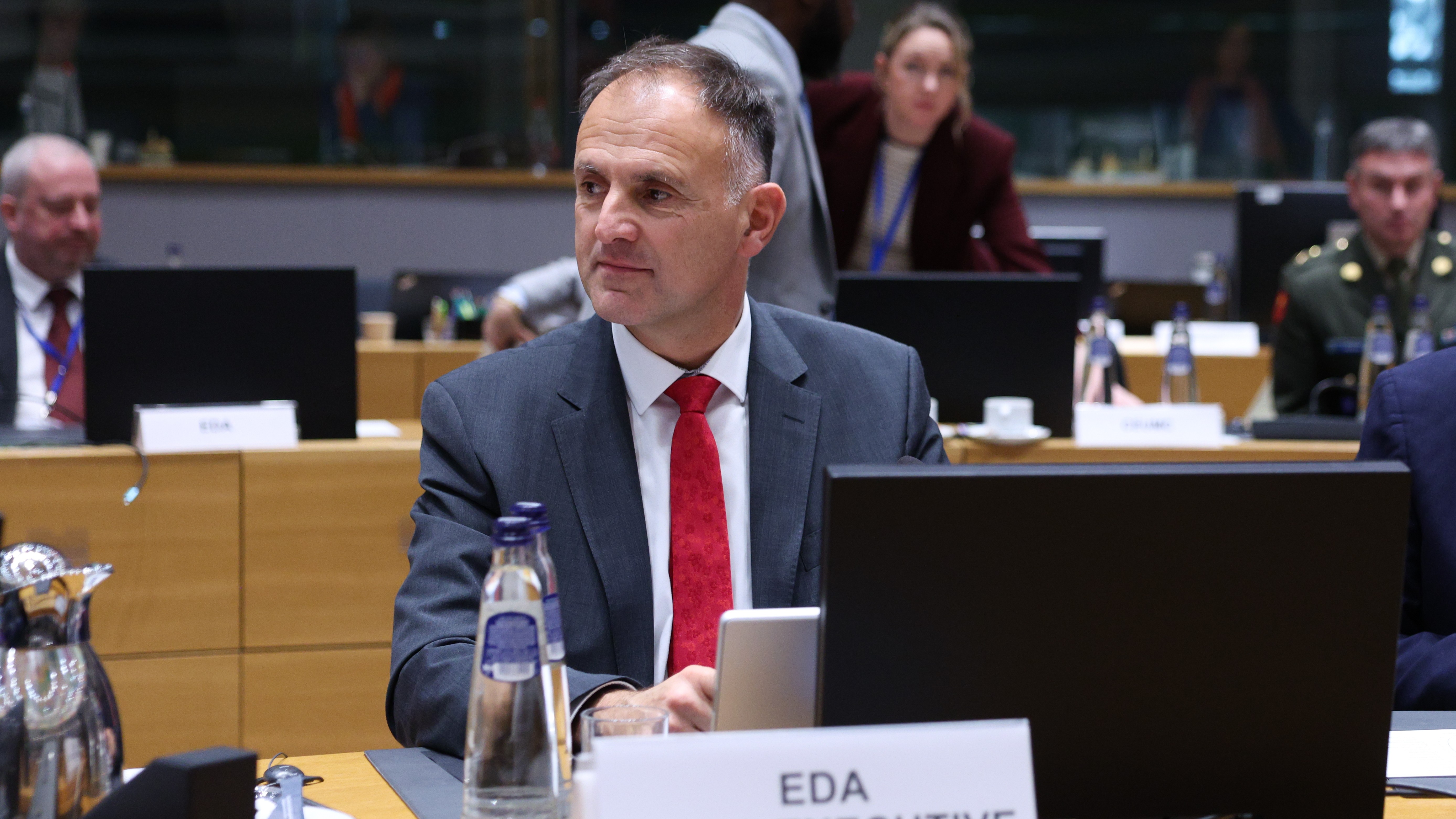
EU Defence Ministers reviewed new proposals to strengthen the European Defence Agency (EDA) during the Agency's Steering Board meeting on 1 December. The proposals follow a call from the European Union leaders in October to reinforce EDA’s role as a central driver of EU defence cooperation.
Since its creation in 2004, EDA has championed collaborative defence efforts. However, Russia’s war against Ukraine and growing instability beyond EU borders have heightened the urgency for greater convergence, interoperability, and faster uptake of emerging technologies.
EU leaders believe a more empowered EDA can provide the organisational backbone needed for a more efficient and resilient European defence landscape, helping Member States step up coordinated efforts at a time of rapidly evolving security challenges.
“We have a clear mandate to strengthen EDA,” said Chief Executive André Denk. “We are working together with the 27 Ministries of Defence on reinforced cooperation mechanisms and key initiatives around five lines of action. This is complex work, and thorough analysis is essential before we present Ministers with a clear path forward in March 2026."
During the Steering Board meeting, Ministers examined the five proposed lines of action and offered political guidance. One of the central ideas discussed was positioning EDA as the primary decision-making body for EU-level capability development — an approach that would help align national programmes, direct investments more effectively, and support Member States in meeting shared defence priorities.
The proposed five lines of actions are:
These measures support the Defence Readiness 2030 agenda, designed to ensure that the EU can respond effectively to a rapidly evolving security environment and that Member States’ common priorities are consistently reflected, through EDA, in EU’s defence-related initiatives.