The European Defence Agency (EDA) hosted Belgium, Cyprus, Greece, Spain, Italy, the Netherlands, and Portugal, as well as shipbuilders, on 15 January to determine the design, needs and way forward for a future European Combat Vessel (ECV), a family of new frigates.
Europe’s navies are facing a growing mix of challenges: ageing fleets, outdated technology and increasingly congested waters. The seven Member States signed a letter of intent in late 2024 to develop a family of frigates to be ready for the 2040s. More EU countries could join the initiative.
Spanish naval representative Luis Calviño, who is coordinating the development of requirements for the ECV, told delegates that the ECV will directly contribute to the European Union’s security. The ECV aims to address naval shortfalls that include underwater and seabed control, information superiority, cyber defence, above-water warfare including ballistic missile defence, and unmanned and autonomous vehicle-enabled operations.
“We need a real commitment from European partners to develop these systems. We’ve been relying on others, but it is something we cannot do anymore,” Calviño said. “It is not realistic to think that a single nation can develop this,” he added. By working together, an ECV fleet reduces costs for equipment with economies of scale and could help develop joint naval schools across Europe.
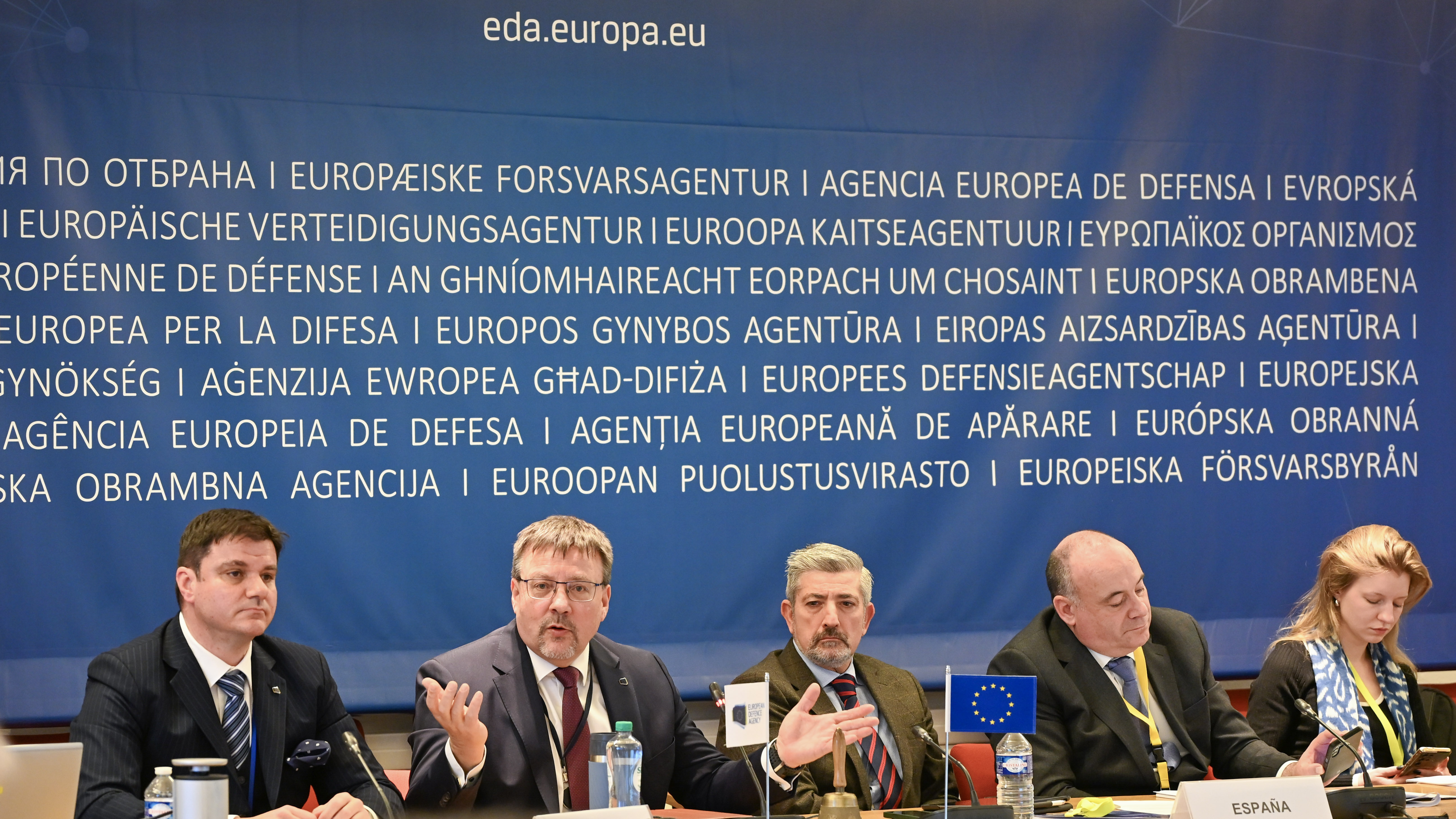
ECV: Not a single ship
Jürgen Scraback, head of EDA’s Maritime Domain Unit, stressed that the project aims to strengthen Europe’s maritime security and autonomy. The EDA-hosted ECV initiative will help meet NATO targets and use NATO standards in its requirements. The ECV will also be interoperable with NATO navies and complementary to the EU’s the Military Planning and Conduct Capability (MPCC).
“We will work closely with the industry, because if you don’t start by collaborating with the industry from the beginning, the work will not succeed,” Scraback said. Once the high-level requirements are agreed, EU industry is due to submit proposals on how to configure the vessels.
The ECV is designed not as a single ship but as a family of vessels sharing common technologies and designs while coming in different sizes tailored to specific missions and Member States’ needs. Unlike traditional shipbuilding, the ECV follows a so-called systems-to-hull approach: technology comes first, and the ship is built around it. The ECV should also function as a floating command centre, coordinating ships, aircraft, drones, and personnel during operations, for instance.